-
Richard Foreman: Now That Communism Is Dead My Life Feels Empty und andere pdf-Books in den /ubu-Editions
-
Robin Rimbaud aka Scanner: BBC radio works @ ubuweb (mp3s)
The old sound was alcoholic. Spirit high. In the early 50's and early 60's pot high music. We're already past the A head, acid tripper stage. But plastic. You can hear it in the music. You can get high on the music, straight. Music's never loud enough. Taxi drivers listen to the news and worry about muggings. You should stick your head in a speaker. Louder, louder, louder. Do it Frankie do it. Oh, how, how. Oh do it, do it. The glops are wearing your clothes now and listening. Someone should paint them in azure stripes and mail them somewhere. It's like holding your arm rigid in a furry black sweater, with your hand bent so it seems amputated. When you straighten it out you get a present on two counts. The View from the Bandstand by Lou Reed
Aus Aspen: The Multimedia Magazine in a box
This is a web version of Aspen, a multimedia magazine of the arts originally published from 1965 to 1971. Each issue of Aspen was delivered to subscribers in a box, which contained a variety of media: printed matter in different formats, phonograph recordings, and even a reel of Super-8 film. About Aspen Magazine Aspen was conceived by Phyllis Johnson, a former editor for Women's Wear Daily and Advertising Age. While wintering in Aspen, Colorado, she got the idea for a multimedia magazine, designed by artists, that would showcase "culture along with play." So in the winter of 1965, she published her first issue. "We wanted to get away from the bound magazine format, which is really quite restrictive," said Johnson. Each issue had a new designer and editor. "Aspen," Johnson said, "should be a time capsule of a certain period, point of view, or person." The subject matter of issue number 1 and issue number 2 stayed close to the magazine's namesake ski spa, with features on Aspen's film and music festivals, skiing, mountain wildlife, and local architecture. Andy Warhol and David Dalton broke that mold with issue number 3, the superb Pop Art issue, devoted to New York art and counterculture scenes. Quentin Fiore designed issue number 4, a McLuhanesque look at our media-made society. The next issue, a double issue number 5+6, was an imaginative, wide-ranging look at conceptual art, minimalist art, and postmodern critical theory. Issue number 6A, a freebie sent to ever-patient subscribers, was a review of the performance art scene centered at New York's Judson Gallery. Next came issue number 7, exploring new voices in British arts and culture. Issue number 8, designed by George Maciunas and edited by Dan Graham, was dominated by artists of the Fluxus group. Issue number 9 plumbed the art and literature of the psychedelic drug movement. The last Aspen, issue number 10, was devoted to Asia and Asian art history. If Aspen was an art director's dream, it was also an advertiser's nightmare. The ads, stashed at the bottom of the box, were easily ignored. And although Aspen was supposed to publish quarterly, in reality the publication date of each issue was as much of a surprise as the contents. "All the artists are such shadowy characters," publisher Johnson said, "that it takes months to track them down." After issue 5+6, there were no more ads in the magazine. Perhaps Aspen was a folly, but it was a vastly pleasurable one, with a significant place in art history. The list of contributors included some of the most interesting artists of the 20th Century. And as an examplar of creative publishing, Aspen was a wonder. Its contents, however, are all but lost: few copies of Aspen have survived. The aim of this web site is to make these contents accessible again.* ubuweb:: ethnopoetics
-
Fluxus Anthology, 30th Anniversary: 26 mp3s
-
Originally focusing on Sound Poetry proper, UbuWeb's Sound section has grown to encompass all types of sound art, historical and contemporary. Beginning with pioneers such as reading his "Calligrammes" in 1913, and proceeding to current practitioners such as or, UbuWeb Sound surveys the entire 20th century and beyond. Categories include Dadaism, Futurism, early 20th century literary experiments, musique concrete, electronic music, Fluxus, Beat sound works, minimalist and process works, performance art, plunderphonics and sampling, and digital glitch works, to name just a few. As the practices of sound art continue to evolve, categories become increasingly irrelevant, a fact UbuWeb embraces. Hence, our artists are listed alphabetically instead of categorically. UbuWeb embraces non-proprietary, open source media. As such, most of our newer files are encoded in the universally readable MP3 format. However, when a recording is still in print and available, we only serve it in streaming RealMedia; we don't wish to take whatever small profits might be made from those taking the efforts to gather, manufacture and properly distribute such recordings. Instead, we hope that by streaming these works, it will serve as an enticement for UbuWeb visitors to support the small labels making this work available. All MP3s served on UbuWeb are either out-of-print, incredibly difficult to find, or, in our opinion, absurdly overpriced.
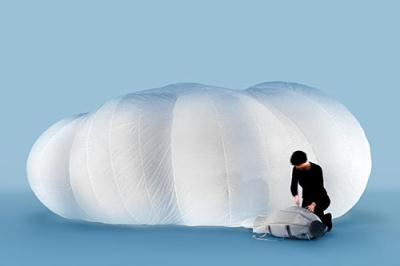

monica förster: CLOUD ist ein portabler Raum fürs Ausruhen, für Gespräche und fürs In-sich-Gehen. Eine separate Raumeinheit zur Aufstellung in einem größeren Raum oder im Freien. CLOUD schafft augenblicklich einen eigenständigen Bereich und etwas Abgeschiedenheit. Leicht überall mit hin zu nehmen. Nach dem Auspacken bringt das Gebläse CLOUD in Form, so lange wie notwendig. Das Aufblasen dauert keine drei Minuten, das Zusammenlegen in den Koffer nicht länger. CLOUD hat eine selbstschließende Schlitztür.
DESIGN Monica Förster, 2002 MATERIAL Reißfestes Polyamid. Gebläse und Koffer werden mitgeliefert. ABMESSUNGEN H230 B530 T400 cm FARBEN Weiß; Bodenfläche grau.
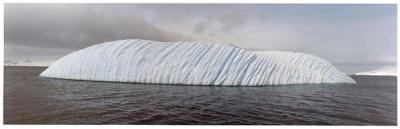
James L. Dyson’s classic book “The World of Ice” brings a mastery of geology, geography, and history to explore the world’s coldest places. In the following passage Dyson describes the similarities between ice and rocks, giving a scientific basis to our habit of ordering drinks “on the rocks” or referring to diamonds as “ice.periodic breakfast table
Breakfast cereal is probably the most highly designed food on today’s grocery shelf, an emblem of industrial artifice. Shape is the key factor in cereal design. Besides being one of the few distinguishing factors in a market flooded with products, shape enables a cereal to belong to a certain category or consumer: the serious cereal, the frivolous cereal, the child-oriented cereal, and the classic (or purist). The Periodic Breakfast Table displays these typologies of shape, allowing readers to note certain patterns: intensity of color is usually accompanied by intensity of sugar content, and protein value generally decreases in proportion to the “realism” of visual references (see French Toast Crunch). Aesthetic and culinary purists will note with pleasure the presence of Puffed Rice and Puffed Wheat: their shape is wholly determined by mode of manufacture (puffing) and their sugar, protein, and sodium content is non-existent.dolce and gabbana cream floral-print long mikado coat
ROLL AGAIN short story: JIMMY GLEACHER
checkers On their first date Jack and Jill are cordial to each other. They sit at a small table taking turns exchanging polite remarks and safe jokes. Jack tells Jill he once bungee jumped at an amusement park but she tops him with a story about skydiving in New Zealand. Jack insists on paying the bill.The modernist picnicchess They’ve been dating five weeks. Jill still won’t sleep with Jack. Jack is determined and plans an entire weekend trip just to get laid. It works but Jill feels like a tramp. When Jack drops her off on Sunday she leans in his car window, kisses him on the cheek, and lies: “I’ve been planning on sleeping with you for a long time.” Then she walks away without turning around.
Picnics played an equally pivotal role in the work of the Eameses. Guests and clients visiting their office in Los Angeles enjoyed exquisite outdoor spreads — delicious testaments to the care demanded of every design project, no matter how ephemeral. Charles and Ray also imbued the picnic with educational status: less daunting than experiencing art in a museum, artfully arranged picnics made aesthetic values more accessible to children and adults alike. Selections from Charles and Ray Eames’ voluminous archive of 35mm slides documenting their picnics and daily rituals. Courtesy of the Library of Congress, Washington D.C.

In the years since Merce Cunningham moved his enterprise to the top floor of Westbeth, a big blocky apartment building on the corner of Bethune and West Streets in lower Manhattan, his dancers have lived the usual studio life, augmented by a kind of ongoing offhand picnic. Their vie bohème has been enhanced by the adjacent rooftop, where they can sneak off to eat lunch, smoke, gossip, or catch a breeze off the Hudson River.
- Closets Busting At The Seams?
- Can't Find What You Want To Wear?
- Shoes Piled Under The Bed?
- Fine Garments Getting Wrinkled?
- Bulky Winter Wardrobe Taking Up All Of Your Closet Space?
Garde Robe solves all of your closet storage and organization problems. We will pick up your off-season or infrequently worn items, arrange for professional dry cleaning and store them at our temperature controlled loft in Manhattan. Each item is photographed, catalogued and then wrapped in tissue and hung in a breathable canvas storage bag. A personal on-line closet, and a leather bound wardrobe portfolio, will be created which you will have access to 24/7. With the click of a button or the turn of a page, you can not only view your items stored at the loft, but you can arrange to have us deliver what you want when you need it.
If you happen to be one of the lucky few with plenty of closet space at home, Garde Robe is still the answer to your closet woes! We will come to your home, organize your closets, photograph your wardrobe and create your personal on-line closet and leather bound wardrobe portfolio. No more frantic searches from closet to closet for that one item you are dying to wear!
Unfassbar. Es hat sich bis zur taz, dem Zentralorgan der Weleda-Generation, durchgesprochen, dass es bauchfreie T-Shirts gibt. Und der Designforscher Sebastian Fischenich ist ein Superaufdecker. Kommerzialisierung. Britney Spears. Da schaust her.
You belong to the Anglo-American, analytical philosophy; you are not interested in continental philosophers, are you?
MILLER
I hate them! I repudiate them! I think that the last important French philosopher was Descartes. Heidegger is ghastly;he is like an elephant's fart. By contrast, in England we have Bertrand Russell, Peter Strawson, Stuart Hampshire . . . The job of philosophy is not to find out the meaning of life, or our relationship to the larger metaphysical principles of the universe; it is finding out the relationship of the mind to the world. How the world is represented in the mind; how do we come to have knowledge; what do we mean by certainty. These are the only things about which you can ask questions. I am interested in problems for which you can foresee a solution; questions to which there is possibly an answer.
philosophie fuer die hoehere verwaltungslaufbahn. verstaendlich dann, dass an manchen britischen universitaeten auch die "kritik der reinen vernunft" im fachbereich "europaeische literatur" gelesen wird.
Malte Lehming, Washington. Malte Lehming, Washington, hat im Tagesspiegel von heute einen kompletten Artikel von Warren St. John aus der New York Times vom 22.Juni abgeschrieben. Ähm. Er würde vermutlich sagen: paraphrasiert.
Warren St. John, New York Times:
By his own admission, 30-year-old Karru Martinson is not what you'd call a manly man. He uses a $40 face cream, wears Bruno Magli shoes and custom-tailored shirts. His hair is always just so, thanks to three brands of shampoo and the precise application of three hair grooming products: Textureline Smoothing Serum, got2b styling glue and Suave Rave hairspray. Mr. Martinson likes wine bars and enjoys shopping with his gal pals, who have come to trust his eye for color, his knack for seeing when a bag clashes with an outfit, and his understanding of why some women have 47 pairs of black shoes. ("Because they can!" he said.) He said his guy friends have long thought his consumer and grooming habits a little . . . different. But Mr. Martinson, who lives in Manhattan and works in finance, said he's not that different. "From a personal perspective there was never any doubt what my sexual orientation was," he said. "I'm straight as an arrow." usw.
Wie ein Macho sieht er nicht aus. Karru Martinson ist dreißig Jahre alt, benutzt teure Gesichtscreme und trägt Schuhe von Bruno Magli. Seine Hemden lässt er sich schneidern. Seine Haare sehen tiptop aus. Kein Wunder: Er wäscht sie mit drei verschiedenen Shampoos und pflegt sie mit Spezial-Kuren. Am Tag arbeitet Martinson als Anlageberater, in seiner Freizeit geht er gerne neue Kleidung kaufen, abends verabredet er sich in Wein-Bars. Wer ihn kennenlernt, denkt oft, Martinson sei schwul. Aber das stimmt nicht. "An meiner sexuellen Orientierung gab es nie einen Zweifel", sagt er, "ich stehe ausschließlich auf Frauen." Das ist frei übersetzt. Auf Amerikanisch heißt der Satz: "I'm straight as an arrow." usw.

Les hundert wichtigste Deutsche. Platz 100. Nicht so besessen wie sein Bruder Michael, aber das muss auch nichts Schlechtes sein. Früher verspottet als arroganter Rolex-Ralle. Wird in den nächsten drei Jahren Weltmeister. Wenn er schnell genug schaltet.
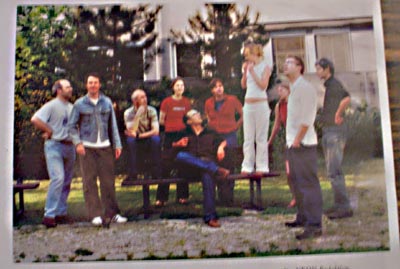
Am Anfang der Entwicklung von NEON stand ein einziger Satz: "Eigentlich sollten wir erwachsen werden." Er fasst zusammen, was viele junge Frauen und Männer denken und fühlen.
Le Gruppenfoto. Viele junge Frauen und Männer. In der Mitte auf der Bank sitzt Michael Ebert, Redaktionsleitung. Es gibt noch eine andere Redaktionsleitung, rechts außen, Timm Klotzek. Man stellt sich diese paar Augenblicke vor, ehe le Gruppenfoto geschossen wird. Wie die jungen Frauen und Männer sich verteilen. Im Raum und auf der Bank. Wie sie, ganz kurz, darüber nachdenken, welche Position sie einnehmen sollen. Wer neben wen sitzt. Dass sie es am besten ganz zwanglos haben wollen, ich könnte ja mit Sandra reden, Sandra ist die Frau, die rechts auf der Bank steht. Ja genau, so könnte das gehen. Der Abstand zwischen manchen von denen. Der kleine imaginäre Kreis, der gezogen ist um den in der Mitte. Der will was davon haben, dass er Redaktionsleitung ist. Es hat sich aber trotzdem alles ganz zufällig ergeben, wie das angeordnet ist. Man fragt sich: ist er als erster gekommen und hat sich in die Mitte gesetzt? Oder ist er als letzter gekommen, weil, sorry, hatte noch ein Telefonat, und die anderen haben gesagt, du musst in die Mitte, und er hat sich zum Schein ein wenig gesträubt, aber keine Widerrede, und war eigentlich eh klar, dass er es sein wird auf der Bank. Andererseits: man ahnt, dass der rechts es ist, der die Schufterei macht. Das Heft statt die Termine. So einigermaßen stellt man sich das vor. Heute abend jedenfalls.
Nächste Seite